What to Wear in Istanbul: Modest Outfits for Every Season
What to wear in Istanbul, season by season. Real temperatures, mosque rules, and why the city’s hills matter more than its dress code.
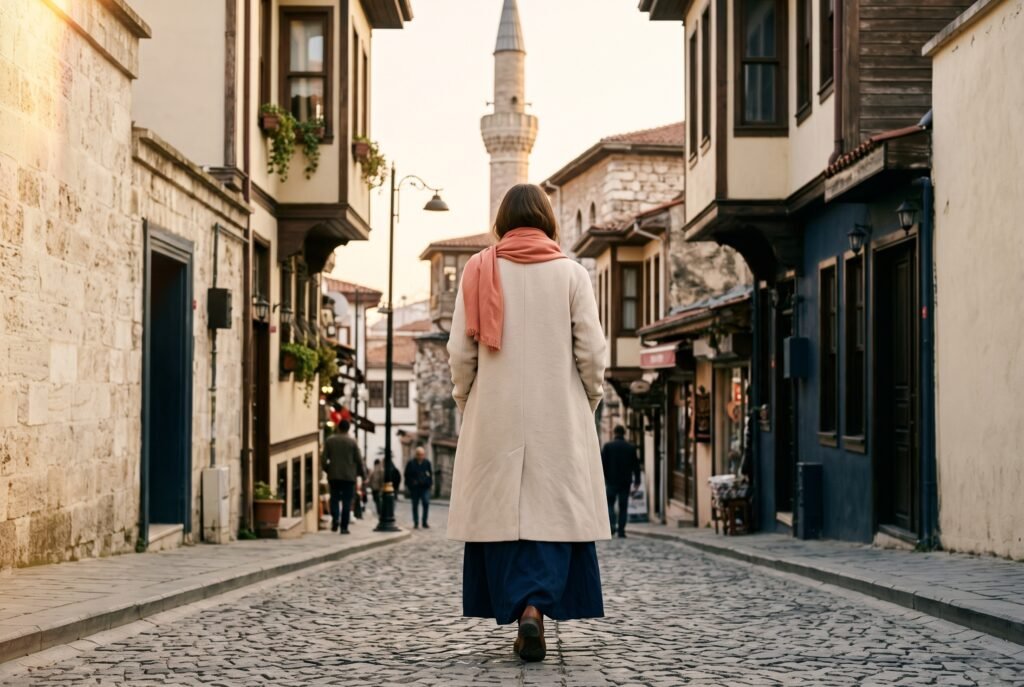
Istanbul is not a hot country, and that is the thing to fix first. People pack for Turkey as though it were the Gulf and arrive in February to average highs of 9°C and lows of 4°C. It is a cool, wet, four-season European city that happens to sit on the edge of Asia.
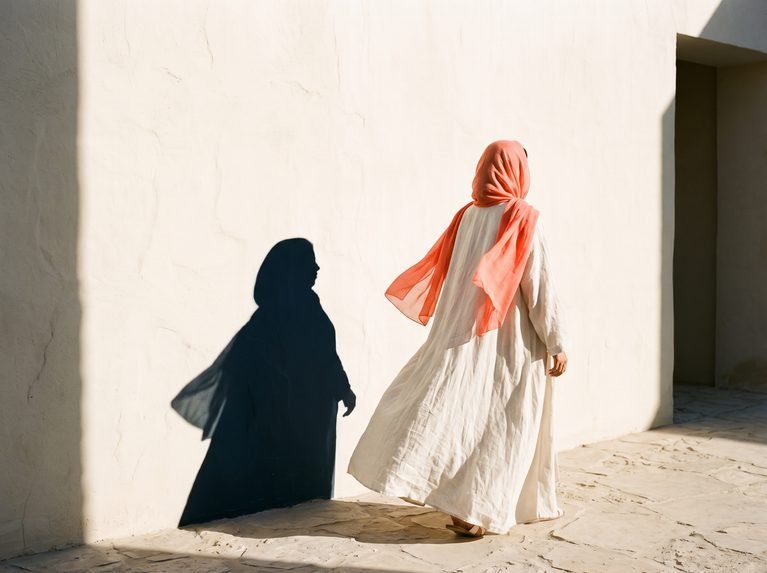
The good news for modest dressing is that Istanbul is the easiest major city in the region to dress for. Covered is normal here. You will see women in every register of dress on the same tram, and no version of it attracts a second look.
The actual temperatures
| Month | High | Low | What that means |
|---|---|---|---|
| January | 9°C | 4°C | Proper winter coat weather |
| February | 9°C | 4°C | The coldest month. Wet and raw |
| March | 12°C | 6°C | Still cold. Layers, not optimism |
| April | 16°C | 9°C | The turn. A coat in the morning, none by afternoon |
| May | 21°C | 13°C | The best month to visit |
| June | 26°C | 18°C | Warm, comfortable, busy |
| July | 28°C | 21°C | Hot and humid |
| August | 28°C | 21°C | Hot and humid |
| September | 25°C | 17°C | The other best month |
| October | 19°C | 13°C | Mild, golden, lovely |
| November | 14°C | 9°C | Cool and wet |
| December | 11°C | 6°C | The rainiest month of the year |
The cool season runs roughly from late November to late March, and the warm season from mid-June to mid-September. December, November and January are the three wettest months, in that order, which matters more than the temperature does.
Where to stay, and the thing nobody mentions
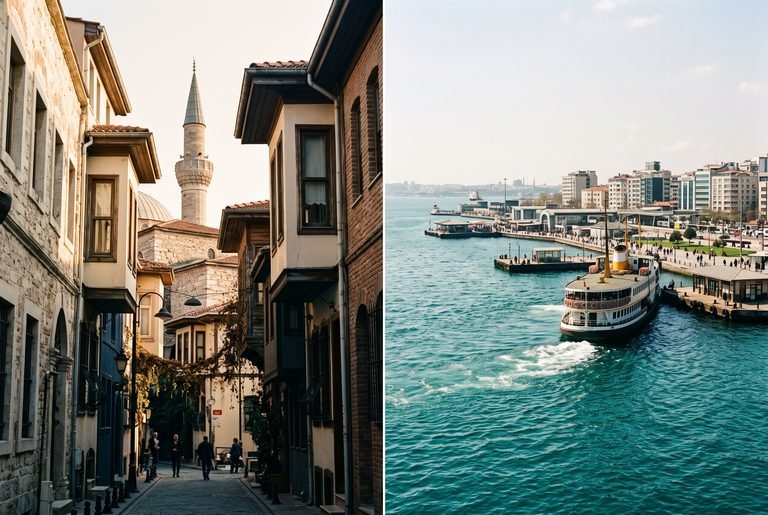
Istanbul is built on hills, and the hills are steep. A hotel that looks four hundred metres from Hagia Sophia on the map can be four hundred metres almost vertically, up cobbles, in the rain.
This matters for modest dressing specifically, because a long skirt or abaya on wet cobbles going downhill is a genuine hazard, and because you will be warmer than you expected arriving anywhere on foot. Check the elevation between your hotel and the places you plan to visit, not just the distance.
What to look for when booking:
- Whether the hotel sits at the top or the bottom of its hill, and which way you will be walking most
- How far it is to a tram or metro stop on flat ground
- Whether the hotel is alcohol-free, if that matters to you — see the separate guide to halal-friendly Istanbul hotels
[HOTEL Compare Tickets LINK]
Mosque rules, which are simpler than people fear
The Blue Mosque, Hagia Sophia and Süleymaniye all welcome visitors outside prayer times, and all ask the same thing: hair covered, shoulders and arms covered, legs covered to the ankle, shoes off.
If you arrive without a scarf, the major mosques lend them at the door at no charge. If you are already dressed modestly you will walk straight in, which is one of the quiet advantages of travelling this way — there is no changing, no borrowing, no queue at the wrap counter.
Two practical notes. Wear socks, because the floors are carpeted and shoes come off, and in winter the stone entrances are cold. And choose shoes you can remove standing up, because you will do it several times a day and the benches get crowded.
Season by season
Winter, December to March
This is the one people get wrong. You need a real coat — wool or padded, knee-length or longer — not a cardigan. Add thermal layers under an abaya or a maxi dress, waterproof boots with grip for the cobbles, and a heavier scarf that doubles as warmth rather than only as cover.
An umbrella is worth packing in December. It rains more that month than any other.
Spring, April and May
The best dressing season in Istanbul. Mid-weight layers, a trench or long cardigan, ankle boots or closed flats. April swings between 9°C in the morning and 16°C by afternoon, so everything should be removable.
May is when the tulips are out and the light is good, and it is the single best month for photographs.
Summer, June to September
Hot and, more importantly, humid — 28°C in Istanbul feels heavier than 28°C in a dry climate. Loose linen and cotton in light colours, wide-leg trousers rather than anything clinging, and large breathable scarves in cotton or jersey rather than chiffon, which traps heat against the neck.
Sandals are fine, but the cobbles are unforgiving — bring one pair of proper walking shoes.
Autumn, October and November
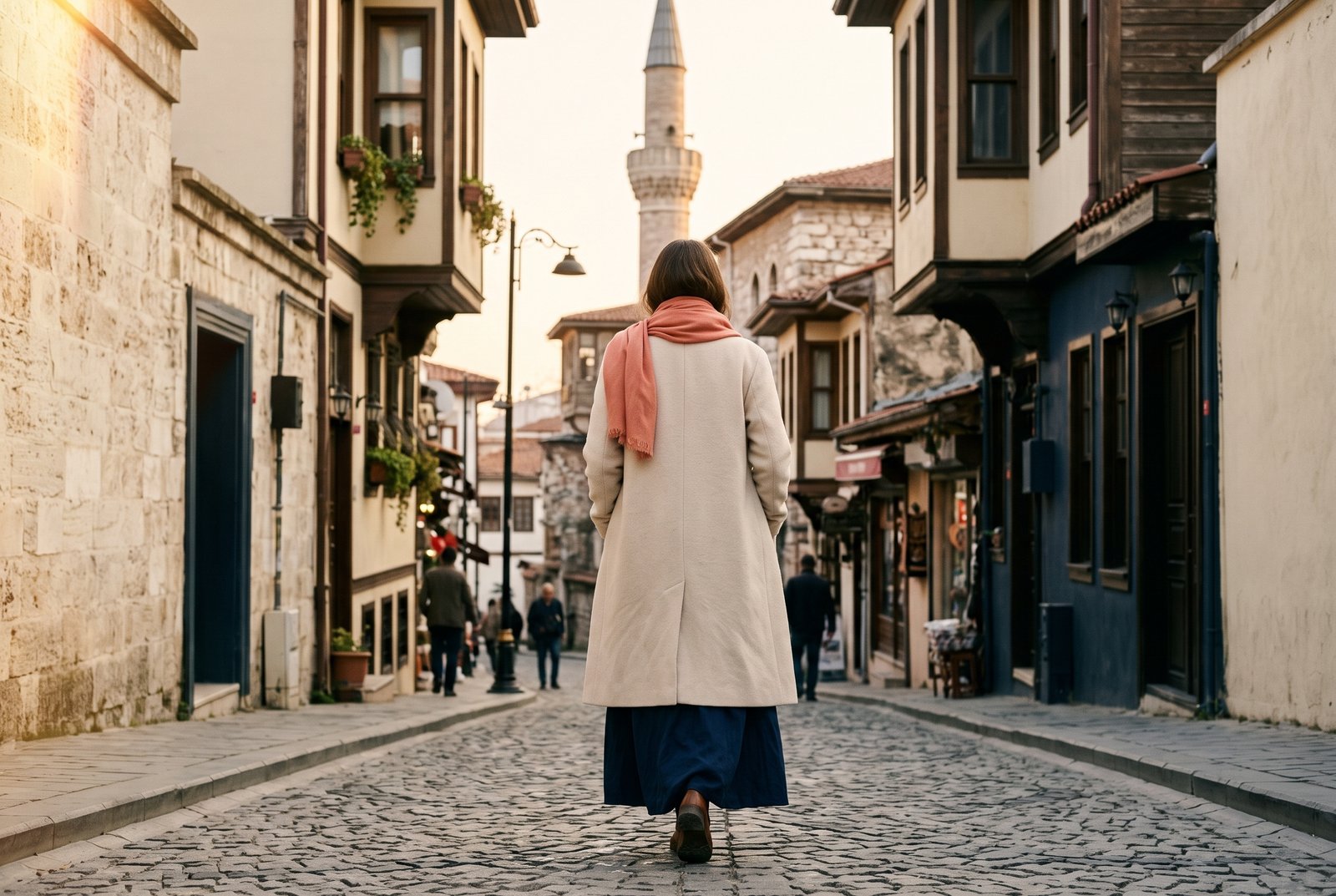
Mild and golden through October, cool and wet by November. The classic Istanbul autumn outfit is a long coat over a maxi dress with ankle boots, and it works for six weeks straight.
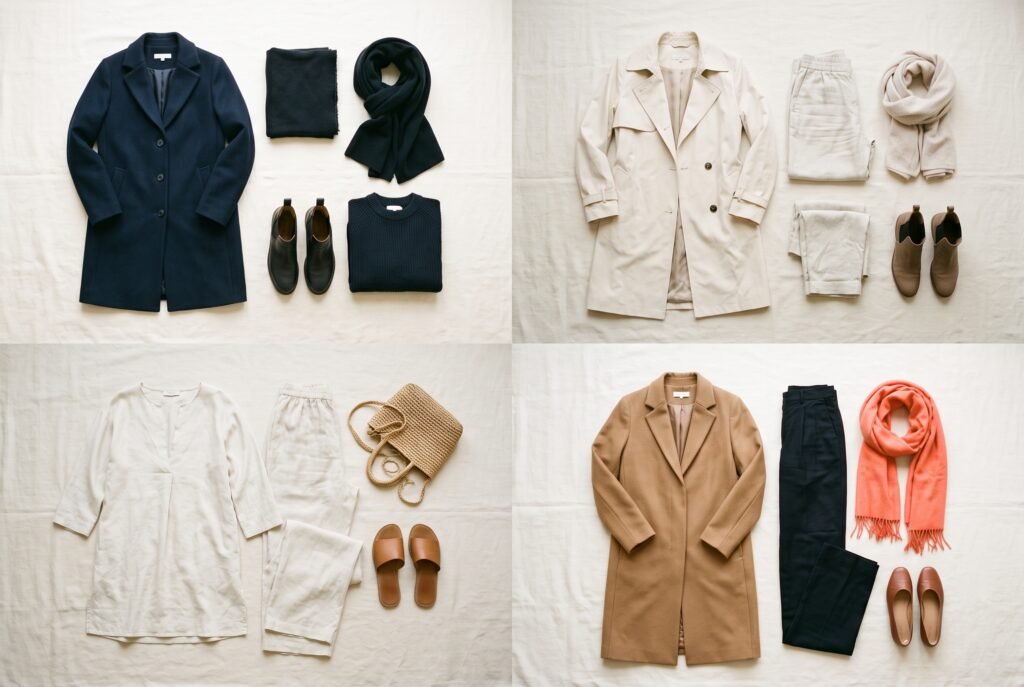
The five pieces that cover any Istanbul trip
- A long coat or trench weighted to your season. This is the whole outfit in winter.
- Two maxi dresses or abayas in neutral colours that layer over and under.
- Wide-leg trousers with two long tunics — the most walkable combination for a city of stairs.
- Ankle boots with grip. Cobbles plus rain is the most common way visitors fall.
- Three large scarves, one warm, two light. The warm one does double duty at mosque doors in winter.
Common questions
Do I need to cover my hair in Istanbul generally? No. Istanbul is a mixed, modern city and all forms of dress are ordinary. Hair covering is required only inside mosques.
Is Istanbul cold enough to need thermals? In January and February, yes, particularly if you plan long days outdoors. The damp makes 9°C feel colder than the number suggests.
Can I wear an abaya comfortably in summer? Yes, in linen or loose cotton. Avoid polyester and crepe — the humidity makes them unbearable.
What is the best month overall? May or September. Both sit in the low-to-mid twenties with manageable crowds and good light.
Are long skirts practical on the hills? Ankle-length is fine. Floor-length on wet cobbles is genuinely risky — shorten by a few centimetres for the trip if you can.
Temperature figures from WeatherSpark’s Istanbul year-round averages. Mosque access rules can change for restoration or religious occasions — check before you go.