How to Stay Cool Fully Covered: Modest Outfits for Hot Countries
Covered does not have to mean hot. The fabrics, colours and cuts that keep you cool at 40C, and the three mistakes that make modest dressing miserable.
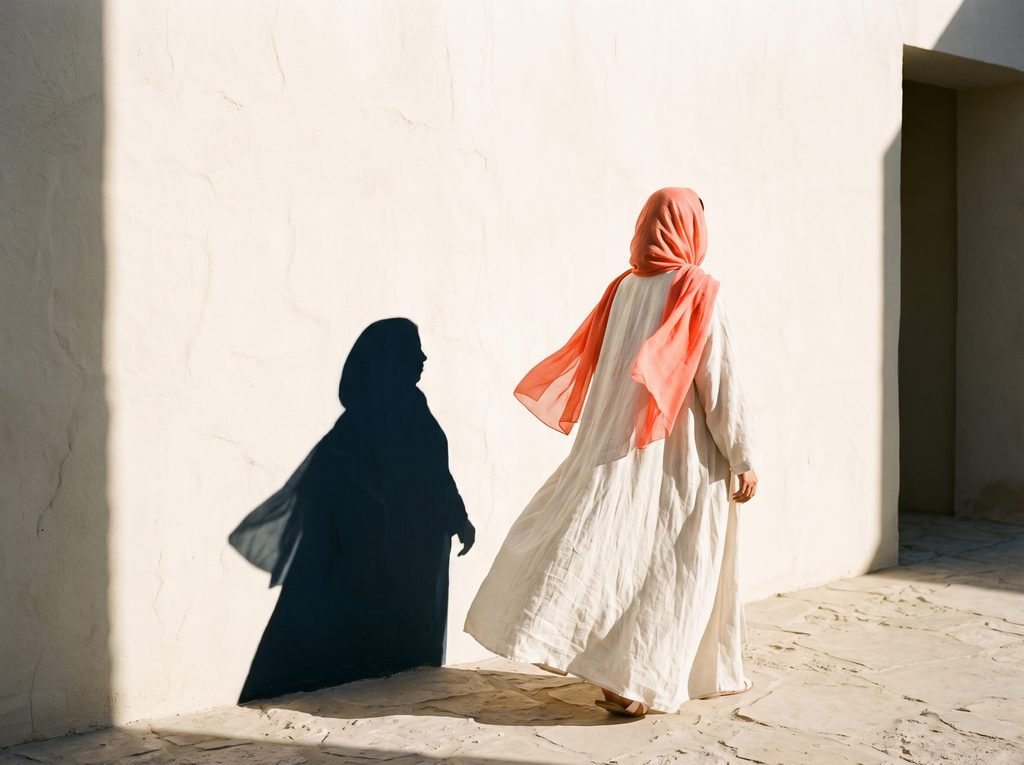
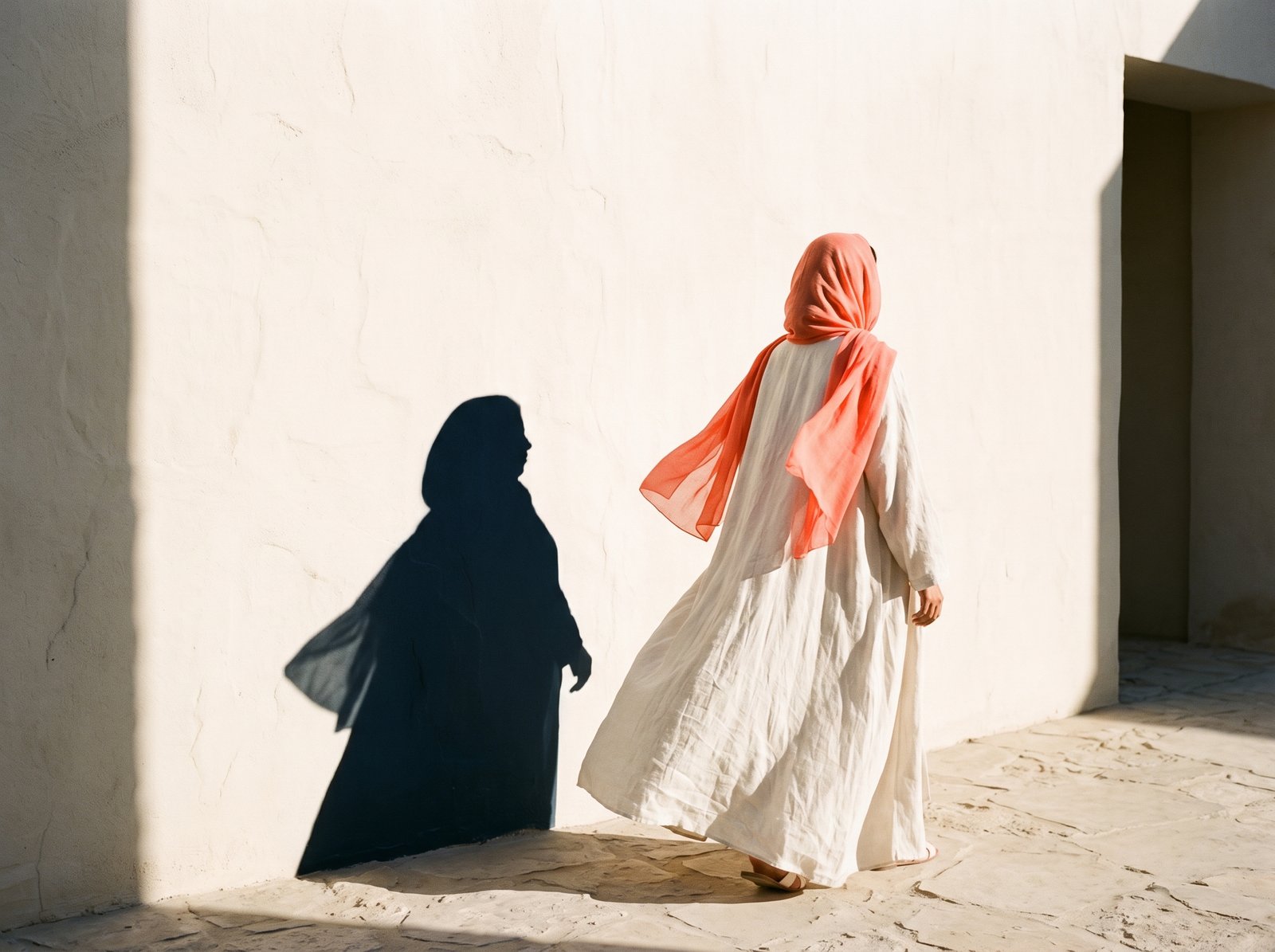
Here is the thing that surprises people: a loose, long, light cotton abaya is cooler than a short-sleeved dress in genuinely hot weather. Not more modest — cooler, in degrees.
It is not a consolation. It is how heat works, and once you understand the mechanism you can dress for 40°C fully covered and be more comfortable than the person beside you in shorts.
Why covered can be cooler
Three things are happening at once.
Loose fabric creates moving air. A gap between cloth and skin lets air circulate and sweat evaporate, and evaporation is what actually cools you. Tight clothing eliminates that gap. This is why desert dress across North Africa, the Gulf and the Sahel converged on long, loose robes independently — it works.
Cover blocks radiant heat. Direct sun on bare skin is a heat source. Covered skin takes that load through fabric instead, which is also why you burn less and dehydrate more slowly.
Sweat stays useful for longer. Sweat that evaporates straight off bare skin in dry heat is partly wasted. Fabric holds it close enough to cool you as it goes.
The catch is that all three depend on the fabric and the cut. Get those wrong and covered genuinely is hotter.
The three mistakes
Black in direct sun. Black absorbs radiant heat and re-radiates it toward you. In an air-conditioned building to a car to a mall, it makes no difference. Walking a souk at midday, it is the difference between pleasant and unbearable. Local women in the Gulf wear black largely in air-conditioned life, which is a detail visitors miss.
Polyester, crepe and “silky” synthetics. These do not breathe. Sweat has nowhere to go, the fabric sticks, and the gap that was supposed to circulate air closes up. A great deal of abaya and modest-wear retail is polyester because it drapes beautifully and photographs well.
Tight anything. Skinny jeans under a tunic, a fitted maxi dress, a tight undershirt. Each one removes the air gap that was doing the work.
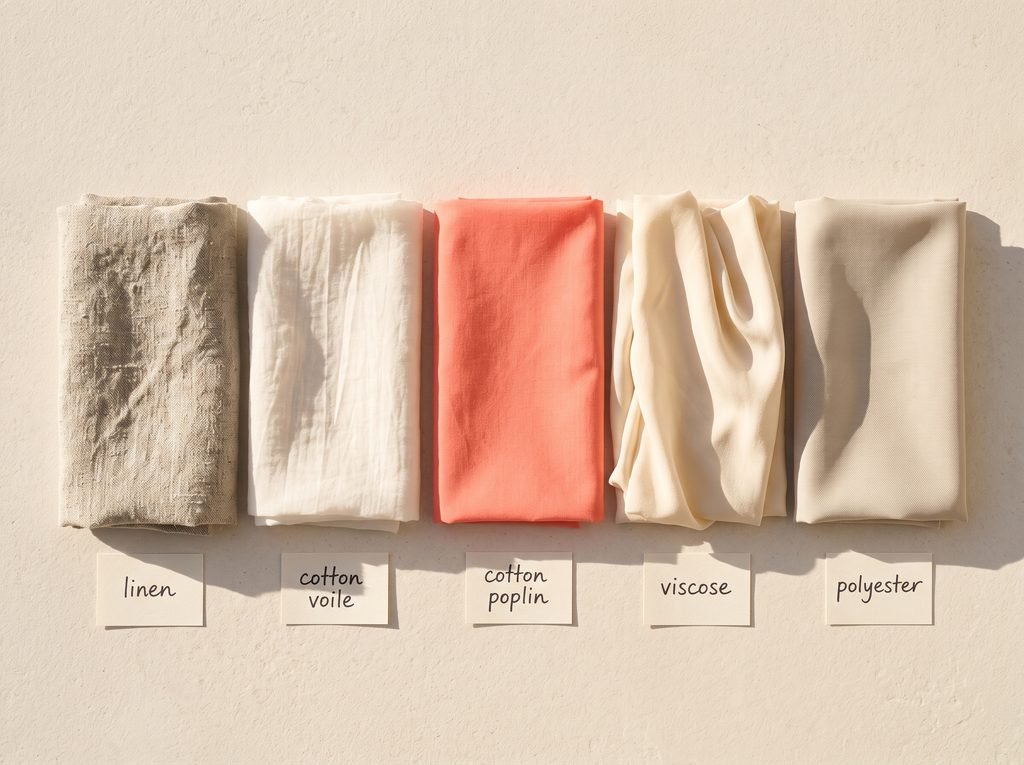
Fabrics, ranked for heat
| Fabric | Verdict |
|---|---|
| Linen | Best. Stiff enough to hold itself away from skin, extremely breathable. Creases, which does not matter |
| Cotton voile or lawn | Excellent. Light, soft, breathable. Check opacity in sunlight |
| Cotton poplin | Very good. More structured, holds shape in a breeze |
| Viscose or rayon | Decent. Breathes reasonably, drapes well, but clings when damp |
| Modal and bamboo | Good for layers worn next to skin |
| Chiffon | Poor for scarves in heat — synthetic chiffon traps heat against the neck |
| Polyester and crepe | Worst. Avoid for anything worn outdoors in heat |
For scarves specifically, cotton or jersey beats chiffon every time in hot weather. Chiffon is the default in modest-wear retail because it drapes, but it sits against the neck and holds heat exactly where you least want it.
Colour, properly
Lightest to hottest, roughly: cream, off-white, pale sand, stone, dove grey, soft coral, olive, mid blue, charcoal, black.
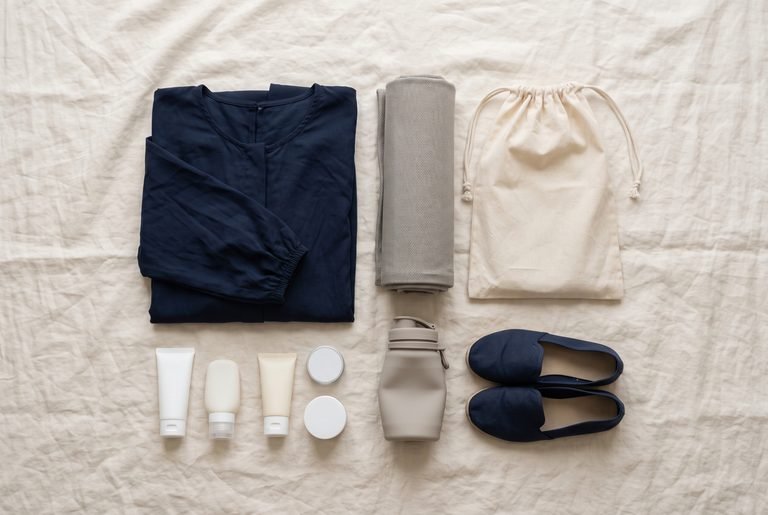
You do not have to live in cream. The rule that matters is simply light for daytime outdoors, darker for evening and air-conditioned interiors. A deep navy abaya is an excellent evening choice and a poor midday one.
White has one drawback worth knowing: it can go translucent in strong sun. Test any white or cream garment outdoors at home, standing with the sun behind you, before you pack it.
The layering trick
This is counter-intuitive and it works.
In very dry heat — the Gulf, interior Egypt, central Turkey in summer — a thin cotton layer under a loose outer layer is cooler than the outer layer alone. The inner layer wicks sweat, the outer layer shades, and the gap between them moves air.
In humid heat — Malaysia, Indonesia, coastal Turkey in August — the opposite applies. Sweat does not evaporate readily, so layers only trap moisture. One single loose layer, in the lightest fabric you own.
Knowing which kind of heat you are flying into is worth more than any individual garment choice.
Where to stay when it is genuinely hot
The thing that matters most is shade and water on site, because in 40°C the gap between activities is where trips fall apart.
- A pool you can actually use — and if you want it private, women-only hours or a plunge pool with the room
- A location you can walk from in the early morning and evening, rather than one that requires a taxi for everything
- Blackout curtains and reliable cooling, which sounds obvious and is not universal
Compare Tickets at the cheapest price for your trip.
A hot-country packing list
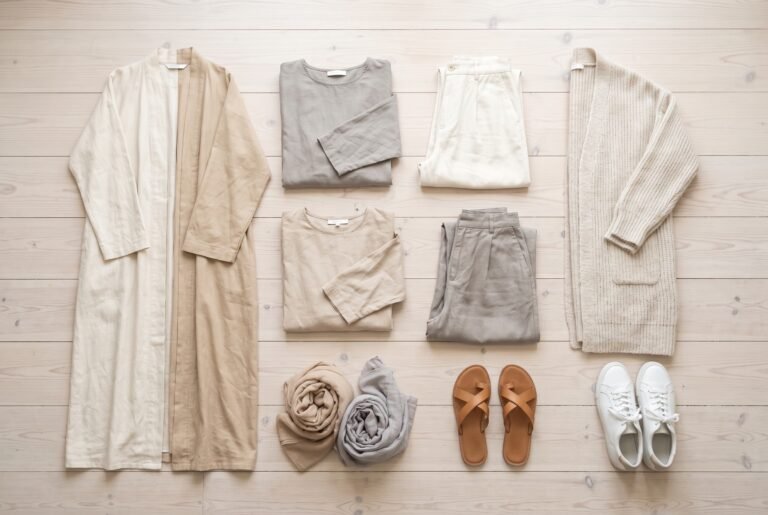
- Three loose linen or cotton abayas or maxi dresses in light colours
- Two pairs of wide-leg cotton trousers
- Two long, loose tunics that fall below the hip
- Four large cotton or jersey scarves — no chiffon
- Thin cotton or modal underlayers if you are heading somewhere dry
- A wide-brimmed hat, which does more than a scarf alone
- Flat sandals and one pair of breathable closed shoes
- A light cardigan, because indoor air conditioning in hot countries is brutal
Common questions
Is it really cooler to cover up? In loose, breathable, light-coloured fabric, yes. In tight polyester, no. The fabric and cut matter more than the coverage.
What about black abayas? Fine for evenings and air-conditioned days, poor for walking in direct midday sun. Keep one for dinner, travel in lighter colours.
Which scarf fabric is coolest? Lightweight cotton or a loose jersey. Avoid synthetic chiffon in heat.
Do I need special “travel” clothing? No. Technical fabrics are useful for hiking, not for cities. Good linen outperforms most of them.
How do I stop white clothing going see-through? Test it outdoors before you travel, and carry a thin nude or cream slip for anything borderline.
General guidance based on how heat transfer and fabric breathability work. Conditions vary by destination and by person — drink more water than you think you need, whatever you wear.