Umrah Packing List for Women: What to Bring and What to Leave Behind
A complete Umrah packing list for women, including what ihram means for women, the unscented rule most people miss, and what you can safely leave home.
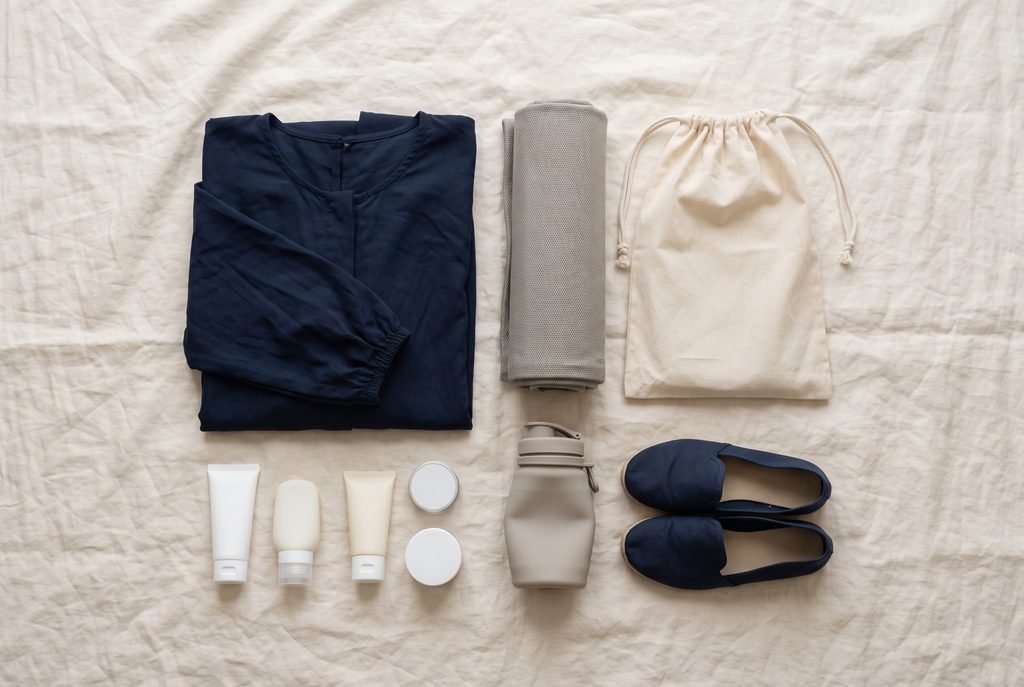
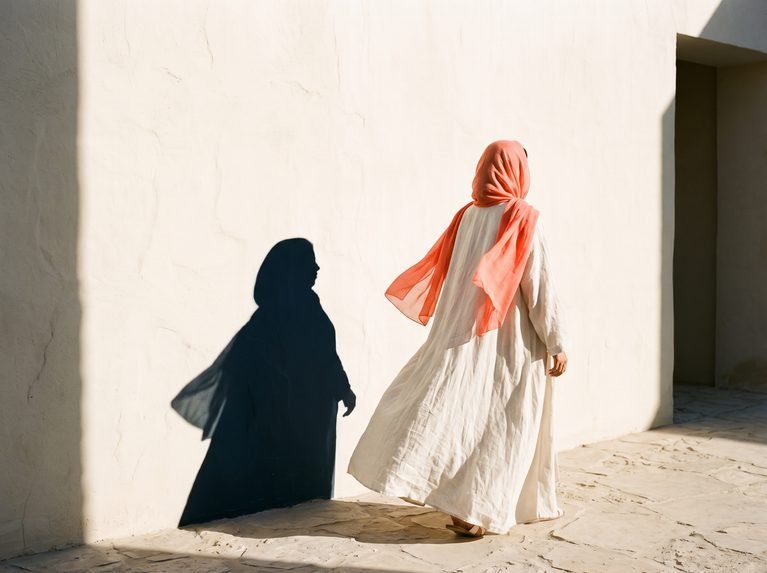
Unlike men, women have no fixed ihram garment. There is no two-sheet uniform to buy. Your ihram is ordinary modest clothing — loose, plain, covering the body with the face and hands left uncovered, in any colour you like.
That single fact removes most of the anxiety people arrive with. The harder part is not the clothing. It is the unscented rule, which quietly rules out most of what is already in your toiletry bag, and which people discover at the airport rather than at home.
What ihram actually requires of women
The requirements are short, and they are mostly about what you do not do.
Clothing. Loose and modest, covering the whole body with the face and hands left uncovered. Not tight, not sheer, not ornate. Any colour is permitted — white is common but it is a custom, not a requirement. Light, breathable fabric matters more than colour in Makkah’s heat.
Hair. Covered, with a covering secure enough to stay put while you are walking and praying. This is where large scarves earn their place; a small one will slip during tawaf and you will spend the whole circuit fixing it.
Footwear. No restriction for women, including shoes that cover the ankle. Choose flat, comfortable and easy to remove, because you will take them off repeatedly. Leave the heels at home.
No perfume or scented products, and do not apply perfume before entering ihram either. This extends further than most people expect — see the next section.
No cutting hair or nails until the Umrah is complete.
Makeup is generally avoided, in keeping with the plain and humble state ihram is meant to represent.
One point where scholars differ
Sources genuinely disagree on face covering in ihram. Some state plainly that niqab and gloves are not worn in ihram; others describe the niqab as optional and a matter of personal comfort. There is a real difference of scholarly opinion here, and it often tracks madhhab, including what is permitted when a woman draws a loose cloth over her face in the presence of unrelated men.
This guide is not the place to settle it, and I am not qualified to. Follow the position of your own scholar or the ruling of the school you follow, and if you travel with a group, ask your group’s scholar before you depart rather than at the Haram.
Where to stay, and why it matters more here than anywhere else
For most trips the hotel is a place to sleep. For Umrah it determines how much of the trip you actually spend in worship, because the variable that matters is walking distance to the Haram.
The difference between a hotel eight minutes’ walk from the gates and one twenty-five minutes away is not a small comfort gap. Over five days of five daily prayers it is several hours of walking in heat, and for most people it decides whether they pray every prayer at the Haram or start praying some at the hotel.
What to check before booking:
- Actual walking minutes to the nearest Haram gate, not the distance in metres and not “close to Haram” in the listing text.
- Whether the rate includes meals, because eating out near the Haram during peak season costs more than most people budget for.
- Whether there is a shuttle, and how often it runs during prayer times, when traffic is at its worst.
- Which gate the hotel is nearest to, which matters enormously once the Haram is crowded.
Compare Tickets your Umrah tour.
The complete list
Clothing
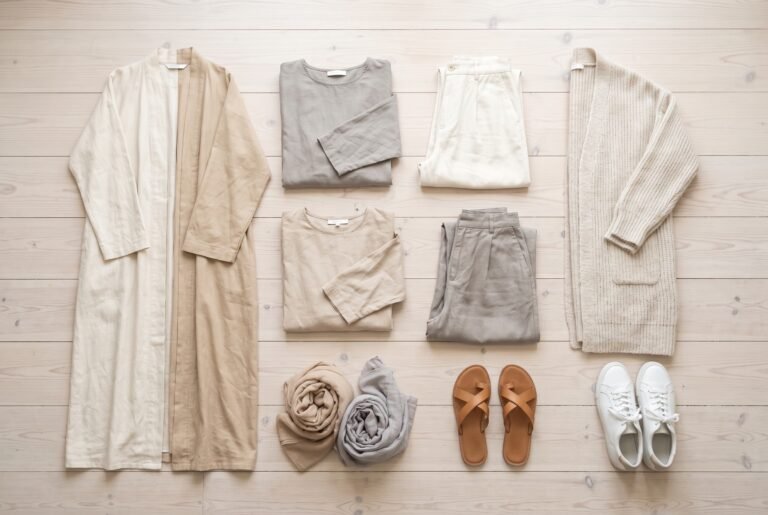
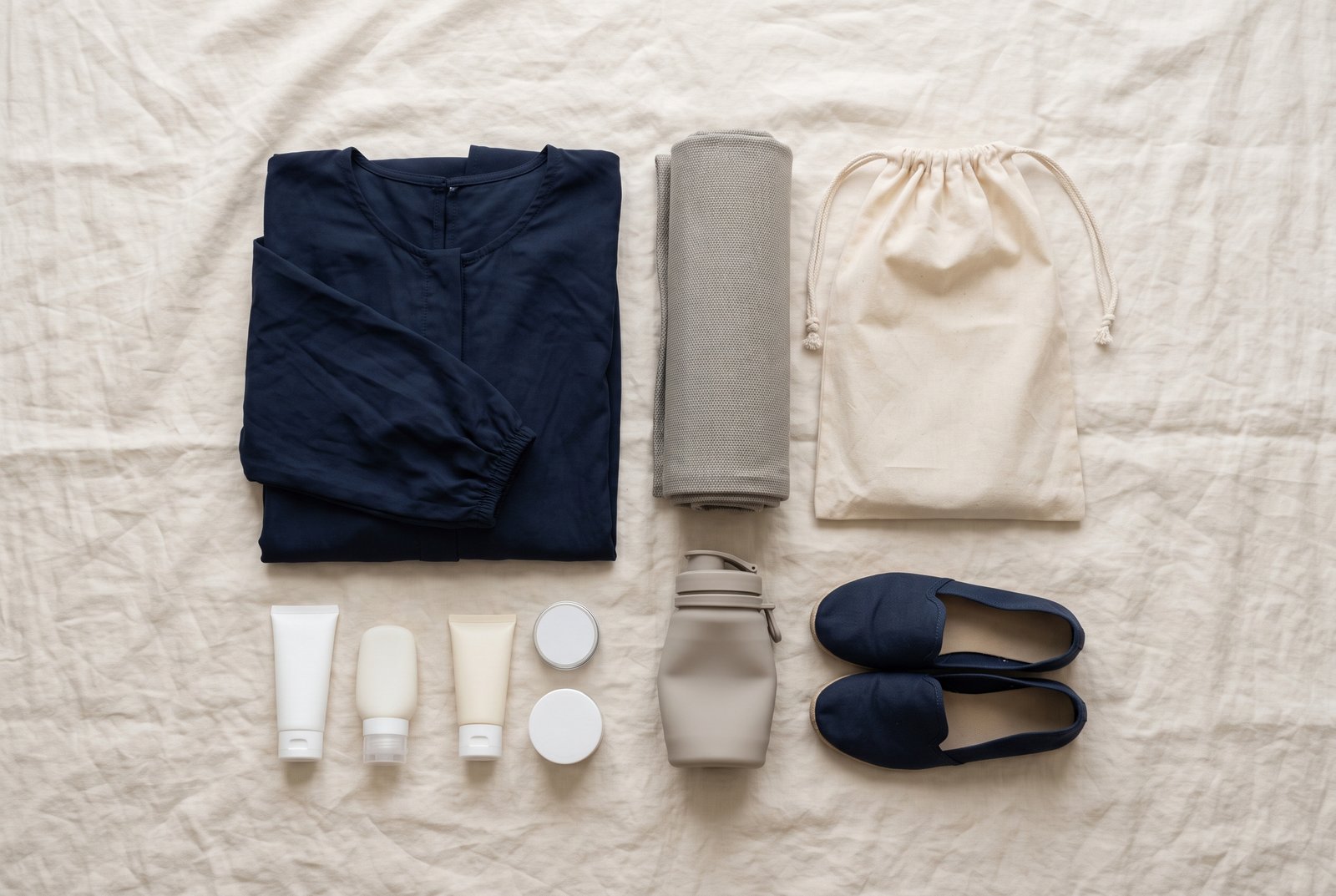
- Three to four lightweight abayas. Breathable fabric. Lighter colours genuinely feel cooler than black in Makkah.
- Long-sleeved cotton tops and lightweight leggings to wear underneath.
- One or two one-piece prayer dresses, which are far quicker than assembling an outfit before each prayer.
- Large cotton or jersey hijabs or shawls. Large, not fashion-sized.
- A light jacket or cardigan for Madinah evenings and aggressively air-conditioned coaches.
- Sunglasses and a sun hat.
Footwear
- Flats or slip-ons you can remove without sitting down.
- Cotton or moisture-wicking socks, including non-slip socks for indoor marble, which becomes genuinely slippery.
- Trainers for ziyarah and general walking outside ihram.
Unscented toiletries — the section people get wrong
Everything here must be fragrance-free, not “lightly scented” and not “natural”. Check the label on each item, because the default version of almost all of these is scented.
- Unscented soap and shampoo
- Fragrance-free sunblock
- Unscented wipes and hand sanitiser
- Foot powder and gel insoles, which matter more than they sound after three days of walking
Buy these before you fly. Unscented versions are harder to find at the destination than at home, and airport shops stock almost nothing fragrance-free.
Documents
- Passport, valid six months, with two blank pages
- Printed Saudi visa
- Flight tickets, including the return
- Printed hotel confirmations
- Vaccination certificates, including Meningitis ACWY
- At least four passport photographs
- Proof of relationship if travelling as a family
- The Nusuk app installed, registered, and permits booked before departure
Print everything. Phone batteries die in queues, and roaming is unreliable inside the Haram complex.
Prayer items
- A lightweight travel prayer mat
- A pocket Quran or dua book, or a trusted app
- A digital tasbeeh or prayer beads
Health
- Prescription medication with a copy of the prescription
- Paracetamol or ibuprofen, and muscle rub
- Vitamin C, zinc, throat lozenges
- Oral rehydration salts — the most underrated item on this entire list
- N95 masks
- Blister plasters and antiseptic wipes
For the Haram itself
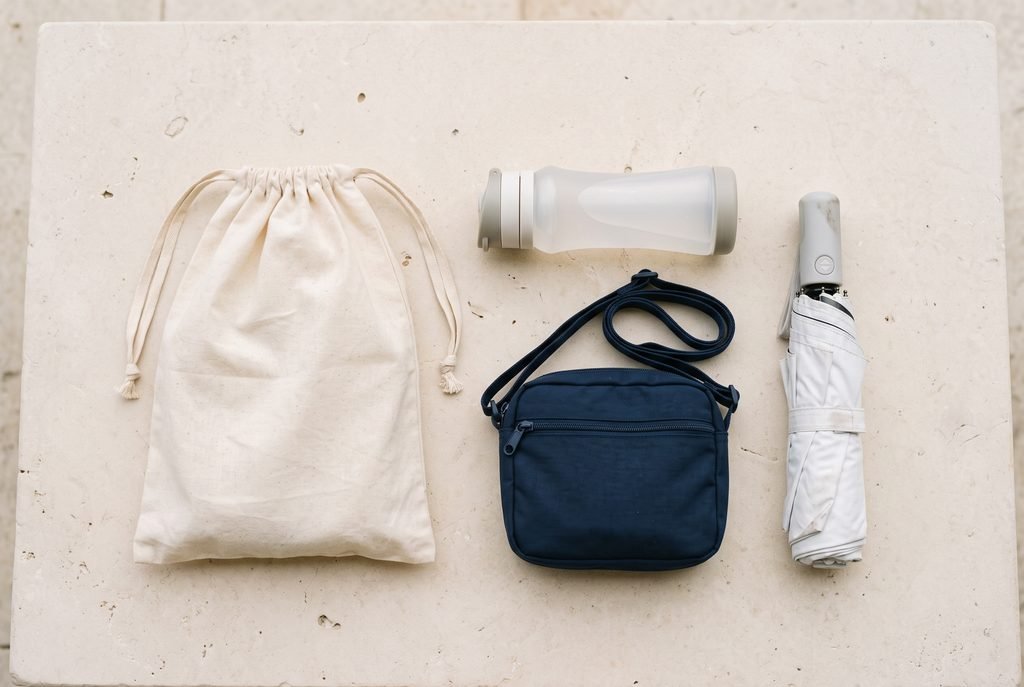
- A drawstring shoe bag, so your shoes come with you rather than being lost at a gate
- A collapsible water bottle for Zamzam refills
- A small backpack or waist bag for tawaf
- A white or silver umbrella, which reflects heat and is genuinely transformative in the courtyard
What to leave at home
Most people pack roughly twice what they use.
- Multiple handbags. One small crossbody covers the entire trip.
- Heels and smart shoes. There is no occasion for them.
- Scented everything — the usual shampoo, the usual deodorant, the usual moisturiser. Check every bottle.
- More than four abayas. Laundry is available and cheap, and the weight is better spent on water and medication.
- A hairdryer. Every hotel has one.
- Heavy books. Your phone holds the whole library.
A note on menstruation
This comes up constantly and most packing lists skip it entirely, which is unhelpful.
The practical part is simple: pack what you normally use, bring more than you think you need, and do not assume you will find your usual brand nearby. Some women discuss delaying their cycle with a doctor before travelling; that is a medical decision to make with a doctor well in advance, not a week before you fly.
The rulings part — what may and may not be performed, and what happens to a planned Umrah — is a question for a scholar, and the answer depends on your circumstances and the timing. Ask before you travel, not after you arrive, so you are not making decisions under pressure.
Common questions
Do women have to wear white for Umrah? No. White is customary, not required. Any plain, loose, modest colour is acceptable.
Can I wear a ring or earrings in ihram? Jewellery is generally not restricted for women in ihram, though many prefer to keep it minimal in keeping with the spirit of the state. Check with your scholar if you are uncertain.
How many abayas do I really need for five days? Three is comfortable, four is generous. Hotel laundry closes the gap.
Is unscented sunblock really necessary? Yes, while in ihram. Fragrance-free versions are widely available but you must buy them deliberately — almost every default sunscreen is scented.
What is the single most forgotten item? A shoe bag. Thousands of pairs of shoes are left at Haram gates every day, and most of them do not find their owners again.
Sources: ihram requirements drawn from this guide to ihram rules for women and the packing checklist from HalalBooking’s Umrah checklist. This article offers practical guidance, not religious rulings — for anything requiring a ruling, consult a qualified scholar.